

May 18, 2026
Before You Ask AI About Your Legal Problem, Read This
By David Noll, Managing Attorney | Cravens & Noll, P.C. | Richmond and Harrisonburg, Virginia
Can AI handle your legal situation? No, but maybe it can give you some guideposts before your next steps – which should probably be to call a lawyer. AI tools can surface general information, but they cannot apply Virginia law to your specific facts, take responsibility for the advice they give, or protect you when something goes wrong. When your rights, your family, or your financial future are on the line, general information is not enough.
We understand why it is tempting. You are stressed, you want answers right now, and a chatbot is free. But here is what that chatbot will not tell you: what it gets wrong could cost you far more than a consultation ever would.
AI Does Not Know Your Case
When you type a legal question into an AI tool, it responds based on patterns in the text it was trained on. It does not know your name, your history, or the specific facts that make your situation different from every other situation that looks similar on the surface.
In Virginia, the details are everything. The deadline to file a personal injury claim, the exact language in a separation agreement, whether a criminal charge can be reduced or dismissed: all of these outcomes depend on facts that are unique to you. An AI gives you the same answer it would give anyone who typed something similar. A real lawyer listens to you.
AI Can Get the Law Wrong, and You Pay the Price
This is not a hypothetical concern. Attorneys across the country have submitted AI-generated legal documents containing case citations that do not exist. The AI did not flag its own error. It produced something that looked authoritative and was completely fabricated.
When that happens in a courtroom, the consequences fall on you, not the technology. A licensed attorney is accountable to the Virginia State Bar. If they give you bad advice, there are professional and legal consequences. If an AI gives you bad advice, there is no one to hold responsible.
That accountability is not a small thing. It is the entire foundation of the attorney-client relationship.
What AI Gets Wrong Most Often in Legal Situations
Here are the areas where trusting AI over a licensed attorney creates the most risk:
- Statutes of limitations. Virginia has strict deadlines for filing legal claims. Miss the window and your case is gone, regardless of how strong it was. AI tools routinely get these timelines wrong or fail to flag that they vary by case type.
- Settlement valuation. If you have been in an accident, an AI cannot tell you what your case is actually worth. It cannot accurately calculate lost wages, long-term medical costs, pain and suffering, or what a Virginia jury is likely to award. Accepting a lowball offer because you thought it sounded fair is one of the most common and costly mistakes we see.
- Divorce and custody agreements. The language in these documents determines your rights for years, sometimes decades. An AI-generated agreement that leaves out the right protections can come back to hurt you long after you thought everything was settled.
- Criminal charges. A conviction in Virginia can follow you for the rest of your life. Early intervention from an experienced criminal defense lawyer can change outcomes in ways that no AI research can replicate.
- Estate planning documents. A will or power of attorney drafted without proper legal review may not hold up when your family needs it most. The time to find that out is not during a crisis.
Your Legal Problem Deserves a Real Answer
Most people do not have a lawyer on speed dial. And usually, that first call comes at one of the hardest points in your life. We know that. At Cravens and Noll, we have been helping Virginians in Richmond, Harrisonburg, and across Central Virginia navigate exactly these moments for over four decades.
When you call us, you speak directly to an attorney. Not a form, not a screening tool, and not an algorithm. A lawyer who will listen to your specific situation, tell you the truth about your options, and be accountable to you every step of the way.
AI is a tool. Your life is not a test case for it. Let us be your lawyers for life.

David is a partner with Cravens & Noll and has been representing Virginians for over two decades, and is proud to have been awarded The Best Attorney in Richmond by the Richmond Times-Dispatch. His practice includes all matters regarding civil litigation including all family law matters, personal injury, and business law matters. Additionally, he represents individuals and families in the area of consumer bankruptcy.
David’s primary focus is working directly with his clients in order to strongly advocate the best possible result. He ensures that all attorneys at the firm follow the mission to be easily accessible to clients.
David and his family reside in Henrico County. When not working with his clients, David enjoys spending time with his family, running and training for half and full marathons, and as much time at the beach surfing with his children.
May 14, 2026
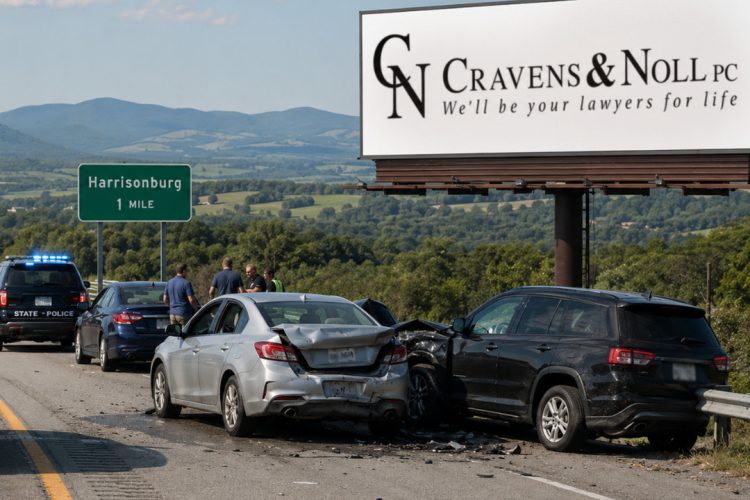
Injured in a Truck or Car Accident on I-81 Near Harrisonburg? Here Is What You Need to Know
By Bethany Rishell Attorney | Cravens & Noll, P.C.
If you live in or around Harrisonburg, you already know that Interstate 81 is not just a highway. It is part of your daily life. Whether you are commuting to work, heading to campus at JMU, or running errands in Rockingham County, chances are you are merging onto I-81 on a regular basis.
But I-81 isn’t like most highways. It carries an unusually heavy volume of tractor-trailers, far more than many other roads in Virginia, and that constant mix of passenger vehicles and freight traffic changes how it feels to drive. Add in the hills, curves, and congestion, and it’s no surprise that crashes, especially involving large trucks, are something many local drivers have seen firsthand. As a personal injury attorney in Harrisonburg who has handled accident cases across the Shenandoah Valley for years, I want to share a few things I wish more people understood before they ever call a lawyer.
Why I-81 Accidents Are Different
Here is something that surprises a lot of people: roughly 41% of all trucking traffic in Virginia travels on I-81 according to VDOT. That is more than I-95 through Northern Virginia and more than I-66. The highway was designed in the 1950s for far less traffic, and the rolling terrain of the Shenandoah Valley makes it even harder for semi-trucks to maintain consistent speeds on the hills between Staunton and Harrisonburg.
The result is a fatal accident rate on I-81 that is nearly double that of other Virginia interstates. We see multi-vehicle pileups, rear-end collisions at exit ramps, and jackknife trucks in bad weather far too often. When a fully loaded tractor-trailer hits a passenger vehicle, the injuries are almost always severe.
If you or a family member has been hurt in a truck accident or car accident near Harrisonburg, the legal situation is more complicated than a typical fender bender. Trucking companies have their own lawyers and insurance teams working the moment a wreck happens. You should have someone in your corner just as quickly.
The Insurance Company Is Not Looking Out for You
I cannot tell you how many times a new client has come into our Harrisonburg office after already receiving a settlement offer in the mail. Usually, it arrives within days of the accident, before the person even knows the full extent of their injuries. It looks like help. It feels like a relief. But it is almost always the bare minimum the insurance company thinks they can get away with.
Insurance adjusters are trained to sound sympathetic, but remember, their job is to close your file quickly and cheaply. Once you accept that check, it is final. Even if new injuries surface weeks later, your physical therapy stretches on longer than expected, or you find out you cannot return to work at all. That signed agreement does not reopen.
Our approach at Cravens & Noll is simple. We help our clients slow down, get the full picture, and make sure nothing is left on the table. We look beyond the accident report. We dig into what this injury means for your life, your ability to work, your family, and your long-term health. And we handle communication with the insurance company so you are not pressured into a decision before you are ready.
What to Do After an Accident on I-81
If you are involved in a crash on I-81 or anywhere in the Harrisonburg area, here are the steps that matter most in the days that follow.
- Get medical care right away, even if you feel fine. Adrenaline can mask pain for hours or even days. Some of the most serious injuries from vehicle accidents, including soft tissue damage, concussions, and internal bleeding, do not show symptoms immediately. A medical record from that first visit also becomes important evidence later.
- Document everything. Photos of vehicles, the road, your injuries. Names of witnesses. Notes on how you feel each day. These details fade fast, and they matter when building a personal injury claim.
- Be careful with insurance statements. You are not required to give a recorded statement to the other driver’s insurance company. Anything you say can and will be used to reduce your compensation. Talk to an accident attorney in Harrisonburg before you talk to them.
And remember, Virginia’s statute of limitations for most personal injury cases is two years. That may sound like a long time, but building a strong case takes time, and waiting too long can cost you.
Why a Local Personal Injury Law Firm Matters in Harrisonburg
Truck accident litigation in Harrisonburg is not the same as handling a case in Richmond or Northern Virginia. The courts are different. The judges are different. The roads are different. I-81 through the Shenandoah Valley has specific hazards, from steep grades near Staunton to congested merges around Route 33 and Exit 247, that someone unfamiliar with this area simply will not understand the way a local attorney does.
At Cravens & Noll, we have been part of the Harrisonburg community for years. Our firm was founded in 1995, and we have been serving the people of the Shenandoah Valley for years. We know the local courts. We know the roads. And we know what it takes to stand up to large trucking companies and their insurance teams on behalf of Valley families.
If you have been hurt in a vehicle accident on I-81 or anywhere in the Harrisonburg area, we are here to help.
Questions? Schedule Your Consultation with Bethany Rishell, Today! Phone: 540-246-0684



May 7, 2026
Thinking About Divorce in Harrisonburg? What You Should Know Before You File
By Bethany Rishell Attorney | Cravens & Noll, P.C.
Nobody plans for a divorce. It is not something you put on a calendar or prepare for like a move or a new job. For most people, by the time they are seriously thinking about it, they have already spent months (sometimes years) trying to figure out whether there is another way. And once the decision is made, you are suddenly faced with a whole new set of questions you never expected to ask.
As a family law attorney in Harrisonburg who has worked with families in the Shenandoah Valley for decades, I want to walk you through what the divorce process looks like in Virginia, because understanding what is ahead can take some of the fear out of it.
Virginia Requires a Separation Period For “No-Fault” Divorces
One of the first things that catches people off guard is that Virginia does not allow you to simply file for divorce and be done with it. For a no fault divorce, you and your spouse must be separated for at least one year. If you have no minor children and both sign a written separation agreement, that period drops to six months. A “no-fault” divorce is one where there are no fault grounds such as adultery, desertion or abuse. Typically it is also when the parties can agree on all terms such as property, debt, and issues related to children.
Separation in Virginia means living apart with the intent that the separation is permanent. You might be wondering whether you can still live under the same roof during this time. Technically, yes, but proving separation while sharing a home is much harder and requires clear evidence that you were living separate lives. And if you share minor children within the home, it is almost definite that the Court will not consider you living separate and apart within the same home. If you are considering this route, it is important to talk to a divorce attorney in Harrisonburg before making assumptions about what counts.
Custody, Support, and Property Do Not Sort Themselves Out
Even when both spouses agree that divorce is the right decision, there are still often major issues that need to be resolved. Child custody and visitation. Child support. Division of property and debts. Spousal support. Each of these can become its own complicated conversation, and what feels fair in the moment does not always hold up over time.
I have seen too many situations where someone agreed to terms early on because they just wanted it to be over and then realized months later that they gave up more than they should have. A child custody lawyer in Harrisonburg can help you think through not just what works today, but what protects you and your children going forward. Custody arrangements, support calculations, and property agreements have long-term consequences, and getting them right the first time matters more than getting them done quickly.
Why Having a Multi-Practice Firm on Your Side Makes a Difference
Here is something a lot of people do not think about when they are searching for a family divorce law firm in Harrisonburg. Divorce does not affect your marriage. It can touch nearly every other part of your legal life. You may need to update your will and estate plan. If there is a family business involved, that brings a whole separate set of questions. If debt is part of the picture, bankruptcy might be worth discussing. And if there are any safety concerns, criminal law could overlap as well.
At Cravens & Noll, we are not a firm that only handles one thing. Our attorneys work across family law, estate planning, bankruptcy, personal injury, criminal defense, and more. That means when your divorce attorney spots an issue with your estate documents or flags a potential financial concern, you do not have to start from scratch with a new firm. We handle it in-house, with people who already know your situation.
Real life does not fit into neat little categories, and your legal support should not either.
What to Look for in a Harrisonburg Divorce Attorney
If you are starting to look for legal help, here is my honest advice on what to prioritize.
Find someone who listens. Family law is personal. Your attorney should understand your situation, your concerns, and what matters most to you before recommending a strategy.
Look for local experience. The family courts in and around Rockingham County work differently than courts in Richmond or Northern Virginia. An attorney who regularly practices in the local courts knows the procedures, the judges, and the expectations. That familiarity can make a real difference in how smoothly your case moves forward.
Ask about the full picture. A good family law attorney will not just handle your divorce paperwork. They should be thinking about your financial future, your children’s well-being, and whether there are other legal steps you should take at the same time.
You Do Not Have to Figure This Out Alone
Divorce is one of the hardest things a family can go through, and it is okay to not have all the answers right now. That is what we are here for. Our team at Cravens & Noll has served the Harrisonburg community for decades, helping families move through difficult transitions with honesty, care, and the kind of personal attention that builds lasting trust.
If you are considering divorce or have questions about custody, support, or any family law matter, we would welcome the chance to sit down and talk it through.
Questions? Schedule Your Consultation with Bethany Rishell, Today! Phone: 540-246-0684

At Cravens & Noll, an experienced Virginia law firm, we are Your Lawyers For Life and have protected and served the rights of over 30,000 people just like you throughout Virginia across 4 Decades in Business. This is why we have been voted one of The Best Law Firms and The Best Attorney in Richmond by the Richmond Times-Dispatch.
We know that every legal case is always…personal. No matter what you are facing right now our attorneys will provide the solutions you need, at a reasonable price. Whether divorce, personal injury, criminal charges, or bankruptcy. We work hard to be your lawyers for life. That means giving your individual case the one-on-one attention and care it deserves.
Our team of trusted and local lawyers will never give false expectations about the potential outcome of your case. You can count on a realistic assessment of your case, in order for you to make a sound decision.
With offices in Richmond and Harrisonburg, we will assist you with dedicated and professional legal advice. In times like this, you need answers, stability, and confidence. Our calculated approach quickly evaluates and stabilizes your situation immediately to prepare you for the legal matters ahead. Our goal as your attorney is that you feel immediate relief from the moment you contact us. We can meet with you face-to-face, by video, by telephone, or together in our office.
Contact our Virginia attorneys today for a consultation. At your appointment, we will ease the burden on your shoulders and provide you with options on how to proceed. Before taking a case, Cravens and Noll lawyers provide an initial consultation for clients.


April 27, 2026
What Types of Insurance Coverage Are Available for Your Personal Injury Claim in Virginia?
By David Noll, Managing Attorney, Cravens & Noll, P.C.
After a car accident in Virginia, most people assume the insurance process is straightforward. You file a claim, the insurance company reviews it, and you get paid what you deserve.
If only it worked that way.
The truth is, understanding what coverage is actually available to you is one of the most important things you can do before you sign anything or accept a single dollar. Virginia’s insurance laws have changed significantly in recent years, and the rules are not always in your favor.
Our team at Cravens & Noll has handled thousands of personal injury cases across Richmond, the Tri-Cities, and the Shenandoah Valley, and we have seen firsthand what happens when injured people navigate this process alone.
Here is what you need to know about the types of insurance coverage available for personal injury claims in Virginia, and why having an experienced accident attorney in your corner matters more than ever.
Virginia Now Requires Every Driver to Carry Insurance
For years, Virginia had a unique and frankly frustrating loophole: drivers could pay a $500 fee to the DMV and legally operate an uninsured vehicle. That option is gone. As of July 1, 2024, Virginia joined almost every other state in the country by requiring all registered vehicle owners to carry auto liability insurance. If you are caught driving without it, you face a $600 noncompliance fine, potential license suspension, and a requirement to carry an SR-22 certificate for three years.
This change is good news for accident victims, but it does not mean every driver on the road carries enough coverage to fully compensate you after a serious crash. That is where understanding the layers of available coverage becomes critical.
Required Coverage in Virginia: Updated 2025 Minimums
Virginia raised its minimum liability coverage requirements effective January 1, 2025. These are now the legal minimums every insured driver must carry:
- Bodily Injury (BI): $50,000 per person / $100,000 per accident. This coverage, carried by the at-fault driver, pays for your medical bills, lost wages, and other damages up to the policy limit. The old minimum was $25,000 per person, which is woefully inadequate for serious injuries. The new limits are a step in the right direction, but they still may not cover everything after a catastrophic crash.
- Property Damage (PD): $25,000 per accident. This covers damage to your vehicle and other property caused by the at-fault driver.
- Uninsured/Underinsured Motorist Bodily Injury (UM/UIMBI): Minimum limits of $50,000 per person / $100,000 per accident, matching your BI limits. This coverage activates when the at-fault driver either has no insurance or does not have enough to cover your losses. Importantly, Virginia law changed the way UIM is calculated: it now pays in addition to the at-fault driver’s coverage rather than being reduced by it. That means more money available to seriously injured victims.
- Uninsured/Underinsured Motorist Property Damage (UM/UIMPD): Minimum limit of $25,000 per accident. This is the property damage equivalent of your UM/UIMBI coverage.
Keep in mind: these are floors, not ceilings. Many drivers still carry only the bare minimum, and medical bills from a serious accident in Virginia can easily exceed these numbers. The stronger your own uninsured/underinsured coverage, the better protected you are.
FR-44 Policies: Higher Requirements After a DUI Conviction
Drivers convicted of a DUI in Virginia are required to carry an FR-44 policy for a minimum of three years. These policies require double the standard minimum limits: $100,000 per person and $200,000 per accident for bodily injury, and $50,000 for property damage. If you were injured by a drunk driver, it is possible the at-fault driver carries higher limits than you might expect, which can affect how much compensation is ultimately available.
Optional Coverage That Can Make a Real Difference
Virginia law does not require drivers to carry every type of coverage. But the optional coverages below can be the difference between full recovery and a financial crisis after a serious accident:
- Medical Payments Coverage (MedPay): This pays your medical expenses regardless of fault, which means it applies even if you caused the accident. Limits typically range from $500 to $10,000. It can also cover funeral expenses in the event of a fatality. If you have MedPay on your own policy, you should access it, but do not let a hospital redirect the billing to your auto insurance in a way that drains these funds prematurely. Our team can help you protect these benefits.
- Comprehensive and Collision Coverage: These cover damage to your own vehicle, whether from a crash, theft, or another event. Both come with deductibles. If the at-fault driver’s property damage coverage is insufficient to cover your vehicle loss, your own collision coverage can step in after you pay your deductible.
What the Insurance Company Is Not Telling You
Here is something that does not appear in any insurance brochure: the adjuster calling to take your statement is not working for you. Their goal is to settle your claim quickly, at the lowest possible number, before you know the full cost of your injuries.
That check they offer early in the process looks appealing when bills are piling up. But once you sign a release, that is final, even if your condition worsens, even if you need surgery six months from now, even if you cannot return to work. The insurance company knows this. They are counting on you not knowing it.
Our job at Cravens & Noll is to slow that process down, get the complete picture, and make sure nothing is left behind. We calculate the real cost of your accident: not just the emergency room bill, but follow-up care, physical therapy, lost income, and the long-term impact on your life. Then we fight for that number, and the insurance companies know we are ready to take it to trial if negotiations fall short.
Talk to a Personal Injury Attorney in Richmond Before You Sign Anything
You do not have to figure out which coverage applies, which adjuster to call, or whether an offer is fair, all on your own. That is exactly what our team at Cravens & Noll is here for. We have spent decades in Virginia personal injury law, we know how these claims work, and we know when an insurance company is not being straight with you.
If you have been injured in an accident on I-95, in the Tri-Cities area, or anywhere in Central Virginia, contact our team for a free consultation. You will speak directly with an attorney, no intake coordinators, no runaround. There is no fee unless we recover compensation for you.
At Cravens & Noll, we will be your lawyers for life.
Frequently Asked Questions
What are the minimum auto insurance requirements in Virginia in 2025?
As of January 1, 2025, Virginia requires all drivers to carry at least $50,000 in bodily injury coverage per person, $100,000 per accident, and $25,000 for property damage. Uninsured and underinsured motorist coverage must match those limits. Virginia also eliminated the option to drive uninsured by paying a DMV fee, effective July 1, 2024.
What does uninsured motorist coverage pay for in Virginia?
Uninsured motorist (UM) coverage pays for your medical bills, lost wages, and other damages when the at-fault driver has no insurance. Underinsured motorist (UIM) coverage applies when the at-fault driver has insurance but not enough to cover the full cost of your injuries. Under Virginia’s updated law, UIM now pays in addition to whatever the at-fault driver’s policy covers.
Should I use MedPay or my health insurance after a car accident?
If you are hospitalized after a car accident, always use your health insurance first. Medical providers may ask you to assign your auto insurance benefits to them, but doing so can reduce the funds available for your overall personal injury recovery. Your MedPay benefits should remain accessible to you directly. Talk to an attorney before filling out any assignment of benefits forms at the hospital.
How long do I have to file a personal injury claim in Virginia?
Virginia’s statute of limitations for most personal injury claims is two years from the date of the accident. Missing this deadline generally means losing your right to sue. It is important to contact an accident attorney well before that deadline, because building a strong case takes time.
Do I need a lawyer if the insurance company already made me an offer?
Yes, especially if you have significant injuries. An early settlement offer from an insurance company is almost always the minimum they believe they can settle for, not the full value of your claim. Once you accept and sign, the case is closed. A personal injury attorney can evaluate whether the offer is fair based on the true cost of your injuries, and negotiate for full compensation before anything is signed.
At Cravens & Noll, an experienced Virginia law firm, we are Your Lawyers For Life and have protected and served the rights of over 30,000 people just like you throughout Virginia across 4 Decades in Business. This is why we have been voted one of The Best Law Firms and The Best Attorney in Richmond by the Richmond Times-Dispatch.
We know that every legal case is always…personal. No matter what you are facing right now our attorneys will provide the solutions you need, at a reasonable price. Whether divorce, personal injury, criminal charges, or bankruptcy. We work hard to be your lawyers for life. That means giving your individual case the one-on-one attention and care it deserves.
Our team of trusted and local lawyers will never give false expectations about the potential outcome of your case. You can count on a realistic assessment of your case, in order for you to make a sound decision.
With offices in Richmond and Harrisonburg, we will assist you with dedicated and professional legal advice. In times like this, you need answers, stability, and confidence. Our calculated approach quickly evaluates and stabilizes your situation immediately to prepare you for the legal matters ahead. Our goal as your attorney is that you feel immediate relief from the moment you contact us. We can meet with you face-to-face, by video, by telephone, or together in our office.
Contact our Virginia attorneys today for a consultation. At your appointment, we will ease the burden on your shoulders and provide you with options on how to proceed. Before taking a case, Cravens and Noll lawyers provide an initial consultation for clients.


April 9, 2026
Before You Sign That Home Improvement Contract, Read This
By David Noll, Managing Attorney, Cravens & Noll, P.C.
Warm weather brings out the to-do lists. Whether you’ve been planning a kitchen update, a deck replacement, or a bathroom remodel, the Richmond area is full of homeowners booking contractors right now. Big-box retailers like Lowe’s, Home Depot, and Costco have made it easier than ever to find installation services bundled with a product purchase. That convenience is real. But there’s something in the fine print that most people never read, and it can cost them far more than the project itself.
I’m talking about liability waivers buried inside home improvement contracts.
What Happens When a Contractor Damages Your Home?
Let’s say you hire a contractor to install new flooring throughout your first floor. During the project, they crack your subfloor, scratch your baseboards, or cause a water leak that damages the ceiling below. You expect them to fix it. That’s a reasonable expectation.
But what if you already signed a contract saying they’re not responsible for any damage caused during the work?
That’s exactly the kind of clause that shows up in some third-party installation contracts. And in Virginia, a well drafted waiver can hold up.
Once your signature is on the page, you’ve given up a lot of leverage.
Third-Party Vendors and the Fine Print Problem
When you purchase installation services through a major retailer, you’re often entering into a separate agreement with a third-party subcontractor. That contractor may be perfectly skilled and professional. But the contract governing their work may have been drafted entirely in their favor.
Common clauses to watch for include:
- Damage waivers that release the contractor from liability for any harm caused to your property during the project
- Limitation of liability provisions that cap what they owe you at the cost of the job, no matter how extensive the damage
- Arbitration clauses that require you to resolve disputes privately, rather than through the courts
- Indemnification language that could actually shift liability onto you
None of these clauses are illegal on their face. In fact, they’re common. But that doesn’t mean they’re fair, and it doesn’t mean you have to accept them without question.
Read the Contract Before You Sign. Always.
This sounds obvious. But in practice, most people sign home improvement contracts at the point of excitement, right after picking the product they’ve wanted for months. The salesperson walks you through the features of your new windows or water heater, and then slides over a multi-page installation agreement that almost no one reads.
Take your time. Read the whole thing. If you don’t understand something, ask. If a clause makes you uncomfortable, say so before you sign. You have the right to negotiate, ask for clauses to be removed, or simply choose a different contractor.
And if you’re dealing with a large project, a significant investment, or an older home where unexpected damage is more likely, it’s worth having an attorney review the contract before you commit. A short consultation can save you from a very expensive dispute down the road.
What If You Already Signed and Damage Occurred?
Don’t assume you’re out of options. Virginia law has limits on what parties can contractually disclaim, particularly when it comes to gross negligence or intentional misconduct. Some waivers are overly broad and may not be fully enforceable. The specific language, the type of damage, and the circumstances all matter.
Document everything. Take photographs of the damage immediately. Save all communications with the contractor and the retailer. Keep every receipt and invoice. That paper trail matters if you need to pursue a claim.
If a contractor has damaged your property and is refusing to take responsibility, that’s a situation worth discussing with a lawyer before you do anything else.
Common Questions About Home Improvement Contracts in Virginia
Q: Can a contractor legally make me waive liability for damage they cause to my home?
A: In many cases, yes, these clauses can be included in contracts and may hold up in Virginia. That’s exactly why reading every contract before you sign is so important. Some waivers are overly broad and may not be fully enforceable, but you need legal advice specific to your situation to know where you stand.
Q: Do I need a lawyer to review a home improvement contract?
A: For smaller projects, it may not be necessary. But for major renovations, large purchases, or any contract with unusual language about liability or arbitration, a quick legal review is a smart investment. It costs far less than resolving a dispute after the fact.
Q: A contractor damaged my property and is refusing to pay. What should I do?
A: Document the damage thoroughly, preserve all correspondence, and speak with an attorney before making any formal claims or accepting any settlement offer. The contract language matters, but so do the specific facts of what happened.
We’re Here When You Need Us
At Cravens and Noll, we handle a wide range of legal matters for Virginia families, including contract disputes and property damage claims. We know how disorienting it can be to discover that a project meant to improve your home has turned into a legal headache. Our team can help you understand your rights, evaluate your contract, and figure out the best path forward.
That’s what being your lawyer for life means to us. Not just handling the obvious legal moments, but being the people you call when life throws something unexpected at you.
Give us a call or reach out online to schedule a consultation. It’s free, and it’s always worth knowing where you stand.
David is a partner with Cravens & Noll and has been representing Virginians for over two decades, and is proud to have been awarded The Best Attorney in Richmond by the Richmond Times-Dispatch. His practice includes all matters regarding civil litigation including all family law matters, personal injury, and business law matters. Additionally, he represents individuals and families in the area of consumer bankruptcy.
David’s primary focus is working directly with his clients in order to strongly advocate the best possible result. He ensures that all attorneys at the firm follow the mission to be easily accessible to clients.
David and his family reside in Henrico County. When not working with his clients, David enjoys spending time with his family, running and training for half and full marathons, and as much time at the beach surfing with his children.


February 24, 2026
How Virginia Law Determines ‘Best Interest’ in a Child Custody Case in Richmond, VA
By W. Allan Burns, Jr., Partner at Cravens & Noll, P.C.
If you’re going through a divorce or separation in Richmond and custody of your children is at stake, you’ve probably heard the phrase “best interest of the child” more times than you can count. But what does that actually mean? How do Virginia judges decide what’s truly best for your child when parents disagree?
I’ve represented parents in custody cases throughout Central Virginia for years. I’ve sat across from worried mothers and fathers who want nothing more than to protect their relationship with their children. The uncertainty of not knowing how a judge will decide is one of the most stressful experiences a parent can face. In this article, I’ll explain exactly how Virginia courts approach custody decisions and what you can do to present the strongest case possible.
Understanding Virginia’s Custody Framework
Virginia law recognizes two types of custody: legal custody (the right to make major decisions about education, healthcare, and religious upbringing) and physical custody (where your child lives and spends their time). Legal custody can be joint or sole. Physical custody can be defined as physical with mother, physical with father or shared.
The “best interest of the child” is the legal standard that guides every custody decision in Virginia. When parents can’t agree, a family court judge evaluates your family’s specific circumstances to determine what arrangement best supports your child’s wellbeing.
The Ten Statutory Factors Virginia Judges Must Consider
Virginia Code § 20-124.3 lays out ten specific factors that judges must consider when determining custody. These aren’t suggestions, their requirements. Let me walk you through each one.
1. The Age and Physical and Mental Condition of the Child
Judges evaluate your child’s specific needs based on their age and any physical or mental health considerations. A toddler has different needs than a teenager. The court examines whether each parent can realistically meet the child’s current needs, appropriate supervision, care, and support for their developmental stage.
2. The Age and Physical and Mental Condition of Each Parent
Your ability to physically and mentally care for your child matters. Judges assess whether you’re capable of providing day-to-day care. If you have health issues that limit your ability, that factors into the decision. Having a mental health condition doesn’t automatically disqualify you, what matters is whether you’re managing it appropriately and whether it affects your ability to parent safely.
3. The Relationship Between Each Parent and Each Child
The strength and quality of your relationship with your child is crucial. Judges want to know: Who has been the primary caregiver? Who helps with homework and attends doctor’s appointments? Who knows the child’s teachers, friends, and preferences?
This is where documentation matters. I tell my clients to save emails showing involvement, keep calendars of school events, and maintain records of day-to-day parenting. These details paint a picture a judge can understand.
4. The Needs of the Child
Every child has unique physical, emotional, educational, and social needs. The court examines which parent is better positioned to meet those specific needs. This also considers the child’s need for stability and continuity. Children thrive on routine, and courts are reluctant to disrupt established patterns that are working well.
5. The Role Each Parent Has Played in the Child’s Upbringing
This focuses on historical patterns. Who has been responsible for medical appointments, school communications, and extracurricular activities? In many families, one parent has taken on more day-to-day responsibilities. That doesn’t mean the other parent loves the child less, but courts recognize these patterns and often seek to maintain them, especially for younger children.
6. The Propensity of Each Parent to Support the Child’s Relationship with the Other Parent
This is one of the most important factors. Virginia courts strongly favor parents who encourage their child’s relationship with the other parent. If you speak negatively about your ex in front of your child, refuse to cooperate on scheduling, or make visitation difficult, judges notice, and they disapprove.
I’ve seen parents with otherwise strong cases lose custody because they couldn’t demonstrate willingness to co-parent effectively. The judge wants to see that you understand your child benefits from both parents, even if you personally dislike or distrust the other parent.
7. The Relative Willingness and Demonstrated Ability to Maintain a Close Relationship with the Child
This examines which parent is more likely to prioritize active involvement in the child’s life. It’s not enough to say you want custody, you need to demonstrate you’ll make your child a priority. For working parents, this might mean showing flexibility in your schedule or having backup childcare plans.
The court looks at your track record. When you’ve had parenting time in the past, how have you used it? Have you been reliable, engaged, and focused on your child?
8. The Reasonable Preference of the Child
Virginia law allows judges to consider a child’s preference, but this is nuanced. The weight given depends on the child’s age, maturity, and reasons for the preference. Courts give more weight to older children’s preferences, particularly teenagers. A 15-year-old’s well-reasoned preference carries more weight than a 7-year-old’s desire to live where there are fewer rules.
I always caution parents against putting children in the middle. Encouraging your child to “tell the judge” they want to live with you can backfire badly. Judges can usually tell when a child has been coached, and it reflects poorly on the parent who did it.
In some cases, judges may appoint a guardian ad litem, an attorney who represents the child’s interests, especially in high conflict cases.
9. Any History of Family Abuse
This is the most serious factor and can be dispositive. Virginia law defines family abuse as any act involving violence, force, or threat that results in bodily injury or places someone in reasonable apprehension of death, sexual assault, or bodily injury.
If there’s credible evidence of family abuse, whether directed at the child or the other parent, it dramatically impacts custody. A protective order, police reports, medical records, or witness testimony all serve as evidence. In cases involving domestic violence, Virginia law presumes it’s not in the child’s best interest for the abusive parent to have custody. This presumption can be overcome, but it requires clear and convincing evidence, an extremely high bar.
If you’ve been a victim, document everything. Keep copies of protective orders, medical records, police reports, text messages, and emails. If you’re accused of abuse, take it seriously and get legal help immediately. You need an experienced Richmond family law attorney to protect your parental rights.
10. Other Factors Necessary to Consider
This catch-all allows judges to consider anything else relevant that doesn’t fit the other nine categories, including:
- Work schedules and childcare arrangements
- Proximity of each parent’s home to school and activities
- The child’s connection to neighborhood, school, and friends
- Extended family relationships and support systems
- Stability of each parent’s home environment
- Ability to communicate and cooperate
I’ve seen judges consider everything from which parent takes the child to church (when religion is important) to which parent has family nearby to help with childcare to whether one of the parents is a smoker.
How Richmond Judges Apply These Factors
Understanding the factors is one thing; understanding how family court judges apply them is another. Judges don’t use a scorecard where each factor gets equal weight. They look at the totality of circumstances and use these factors as a framework.
Some factors carry more weight depending on your situation. If there’s domestic violence, that overshadows others. Judges also heavily weigh consistency and stability; children generally do better with predictable routines and minimal disruption.
What You Can Do to Strengthen Your Custody Case in Richmond
If you’re facing a custody dispute, here are concrete steps to show the court you’re acting in your child’s best interest:
Be involved and document it. Attend school events, medical appointments, and activities. Save emails, maintain calendars, take photos. When it comes time to show the judge your relationship with your child, you’ll want written evidence.
Maintain stability. If possible, stay in the same neighborhood. Keep your child in the same school and activities. Courts value continuity.
Support the other parent’s relationship. Facilitate visitation, speak respectfully about your ex (at least in front of your child), and show the court co-parenting is about your child’s needs, not your feelings.
Address personal issues proactively. If you’re dealing with mental health concerns, substance abuse, or other challenges, get help. This demonstrates responsibility and commitment to being the best parent possible.
Create a realistic parenting plan. Consider your work schedule and practical logistics. A plan that looks good on paper but won’t work and won’t impress the judge.
Keep detailed records of concerns. If you have legitimate safety concerns, document them. Save concerning texts, document missed visitations, keep a factual journal. But be careful documentation should be relevant, not petty grievances.
Work with an experienced attorney. Custody cases are complex and have high stakes. You need someone who knows how Richmond judges approach these cases and how to present your case effectively.
Protecting Your Relationship with Your Child
In my years practicing family law in Richmond, I’ve learned that custody cases are rarely about “winning”, they’re about finding an arrangement that truly serves your child’s best interest while protecting your relationship with them. The parents who fare best are those who show the court they’re focused on their child’s needs, not on defeating the other parent.
At Cravens & Noll, we’ve helped countless Central Virginia families navigate custody disputes with sensitivity and skill. We understand the fear and uncertainty you’re feeling. We know how much is at stake. And we’re committed to fighting for an outcome that protects your child’s wellbeing and your parental rights.
Every custody case is unique. Virginia’s best interest factors provide a framework, but how they apply to your specific family depends on the details of your situation. The decisions you make now, how you communicate with your ex, how you document your parenting, how you present yourself to the court, can have lasting consequences.
If you’re facing a custody dispute in Richmond or anywhere in Central Virginia, don’t navigate it alone. Contact Cravens & Noll today to schedule a consultation. We’ll review your situation, explain how Virginia’s custody laws apply to your family, and develop a strategy that puts your child first.
Call us at 804-330-9220 or reach out online.
Your child’s future, and your role in it, is too important to leave to chance.
Let us be your lawyers for life and guide you through this challenging time with the experience, compassion, and advocacy you deserve.

Allan Burns is a University of Richmond Law School alum. He excels in the areas of family law, bankruptcy, business law and personal injury.


February 11, 2026
Top 5 Qualities to Look for in a Richmond Family Law Attorney
By David Noll, Managing Attorney, Cravens & Noll, P.C.
When you’re facing a divorce, custody battle, or any family law matter, choosing the right attorney can feel overwhelming. You’re already dealing with one of the most stressful situations of your life. I’ve practiced family law in Richmond for decades, and I’ve seen how the right attorney makes all the difference in both your case outcome and emotional wellbeing.
Most people don’t have a family law attorney on speed dial. When you need one, you’re often in crisis mode. Maybe your spouse just said they want a divorce. Maybe you’re worried about losing time with your children. Maybe you’re trying to protect assets you worked years to build.
Here are the five most important qualities to look for when choosing a family law attorney in Richmond, based on what I’ve learned from handling thousands of divorce, custody, and family law cases across Virginia.
1. Deep Experience with Virginia Family Law
This might seem obvious, but it’s worth stating clearly: Virginia family law has its own unique rules, procedures, and nuances. An attorney who practices in multiple states or is new to family law in Virginia may not have the depth of knowledge you need.
Why Virginia Specific Experience Matters
Virginia has unique divorce requirements. For uncontested divorce, you must be separated for at least one year – or six months if you have no minor children and a signed separation agreement. Virginia doesn’t recognize legal separation like some states, and proving separation while living under the same roof becomes complicated.
Virginia follows equitable distribution for dividing marital property, but “equitable” doesn’t necessarily mean “equal.” Courts consider multiple factors including each spouse’s contributions, earning capacity, and circumstances leading to divorce. A Richmond family law attorney who knows how local judges tend to rule has a significant advantage.
For custody, Virginia courts focus on the best interests of the child. Richmond judges in Henrico Circuit Court, Chesterfield Circuit Court, and Richmond City Circuit Court each have their own tendencies. Local experience matters.
What to Ask About Experience
Don’t be shy about asking direct questions:
- How many years have you practiced family law in Virginia?
- How many cases like mine have you handled in Richmond area courts?
- Are you familiar with the judges who might hear my case?
A confident, experienced attorney will answer these questions directly and help you understand what realistic outcomes look like based on their experience with similar cases.
2. Strong Communication Skills and Accessibility
Family law cases can drag on for months or even years. During that time, you’ll have questions. You’ll need updates. You’ll want to understand what’s happening and why. An attorney who doesn’t communicate well or who’s impossible to reach will leave you feeling anxious and in the dark.
What Good Communication Looks Like
At Cravens & Noll, we believe you deserve to speak directly with your attorney, not just a paralegal or assistant. When you call with questions about your divorce or custody case, you should get answers from the person who knows your case intimately.
Good communication also means explaining things as simply as possible. Family law has its own vocabulary – terms like “pendente lite,” “equitable distribution,” and “material change in circumstances.” Your attorney should translate this legal jargon into language you actually understand.
Since I have been practicing family law for almost 30 years, the process and terminology is second hand to me at this point. However, I am always aware and explain the process to my clients in a way that is understandable to someone who has no experience in these types of matters. Communication is also about managing expectations honestly. I don’t tell clients what they want to hear – I tell them the truth about their case, even when it’s difficult. If your spouse has a strong custody argument, you need to know that upfront so we can address it strategically. If your proposed settlement isn’t realistic given Virginia law, I’ll be honest about that too.
Red Flags in Communication
Watch out for attorneys who:
- Take days or weeks to return phone calls or emails
- Only communicate through staff
- Use legal jargon without explaining what it means
- Make promises that sound too good to be true
- Rush you off the phone or seem annoyed by questions
During your initial consultation, pay attention to how the attorney communicates. Do they listen to your concerns? Do they answer your questions directly? Do you feel heard and understood? These first impressions are important.
3. Genuine Empathy and Understanding
Family law isn’t like other areas of law. I’m walking with people through some of the most painful moments of their lives – the end of a marriage, fighting for time with children, navigating grief, anger, and fear that come with major family transitions.
You’re not just a case number. You’re a person going through an incredibly difficult time. I’ve sat across from clients who could barely speak through tears. I’ve had clients so angry they were shaking. I’ve talked with parents terrified they’ll lose their relationship with their children.
Empathy doesn’t mean I won’t be direct or that I’ll let emotions drive bad decisions. It means I recognize that behind every family law case is a human story involving children, broken trust, financial anxiety, and an uncertain future.
At Cravens and Noll, it is baked into our DNA to provide both emotional support and objective legal guidance. Yes, I understand you’re angry at your spouse. But I also need to help you make rational decisions about custody and finances rather than letting anger drive choices you’ll regret later. A good family divorce lawyer Richmond families trust acknowledges your emotions while helping you focus on achieving the best possible outcome for your future.
4. Willingness to Fight When Necessary (But Also to Negotiate)
Not all family law cases need to be contentious courtroom battles. The best outcomes often come through negotiation and settlement. But you also need an attorney who isn’t afraid to go to trial when necessary.
Many divorces can be resolved through negotiation or mediation. This approach is usually faster, less expensive, less emotionally draining, better for children, and gives you more control over the outcome. We always explore settlement options first.
But sometimes, negotiation won’t produce a fair result. If your spouse is hiding assets, trying to unfairly limit your custody time, or making unreasonable demands, then you need an attorney prepared to fight in court. I’ve tried numerous family law cases in Richmond area courts and I’m ready when clients need me to fight. Opposing counsel knows it – which helps during negotiations.
Ask potential attorneys about their settlement rate versus trial rate, how they decide when trial is necessary, and their track record. You want an attorney who can negotiate skillfully when possible and litigate effectively when necessary.
5. A Multi-Practice Firm That Sees the Bigger Picture
This is something people often overlook when choosing a divorce attorney Richmond, but it can make a huge difference: does your attorney practice only family law, or do they work with a firm that handles multiple practice areas?
Why Multi-Practice Matters
Real life is messy. Family law issues rarely exist in isolation. Consider these common scenarios:
Divorce and Financial Stress – Going through a divorce is expensive. You might suddenly be facing debt you can’t manage on one income. If your divorce attorney works with bankruptcy attorneys, they can identify these issues early and help you plan strategically. At Cravens & Noll, our family law attorneys collaborate with our bankruptcy team to give clients a complete picture of their options.
Custody and Estate Planning – If you’re going through a custody battle, you should also be updating your will, powers of attorney, and beneficiary designations. Having access to estate planning attorneys within the same firm makes this seamless.
Divorce and Criminal Charges – Unfortunately, some divorces escalate to protective orders or criminal charges. If your firm also handles criminal defense, you have immediate access to that expertise without starting over with a new attorney.
Property Division and Real Estate – Complex property division might require real estate transactions, business valuations, or understanding of tax implications. A multi-practice firm has resources to consult across specialties.
Your Lawyers for Life
At Cravens & Noll, we’ve built our practice around the philosophy of being “Your Lawyers for Life.” We don’t want to just handle your divorce – we want to be the firm you call when any legal issue arises, now or in the future.
Maybe today you need a divorce lawyer. Three years from now, you might need help with a custody modification because your ex wants to relocate. Five years down the road, you’re remarrying and need a prenuptial agreement. Ten years from now, you’re ready to buy a new home or start a business. We’re here for all of it.
This continuity matters because we already know you, your history, and your goals. You’re not explaining your situation to a stranger every time you have a legal need. We’ve been serving Richmond families for over three decades with this comprehensive approach, and our clients tell us it makes a real difference.
Making Your Decision
Choosing a family law attorney is one of the most important decisions you’ll make during your divorce or custody case. Take time to meet with a few attorneys before deciding. Use that opportunity to evaluate whether they have these five essential qualities.
Pay attention to whether you feel heard, they explain things clearly, have specific experience with cases like yours, are honest about challenges, and whether you feel confident in their representation.
Trust your instincts, but also do your homework. Check reviews, verify credentials, and ask direct questions about experience and approach.
Why Clients Choose Cravens & Noll
I’m proud to be part of a firm that embodies all five qualities. Our family law team has decades of combined experience in Virginia courts. We’re accessible. We approach every case with empathy while providing objective legal strategy. We negotiate skillfully but aren’t afraid to fight when necessary. And our multi-practice approach means we see the complete picture of your legal needs.
We’ve helped thousands of families navigate divorce, custody, support disputes, and other family law matters across Richmond and Central Virginia. Our clients come back years later for other legal needs and refer friends and family because they know we care.
If you’re facing a family law issue, call us for a consultation. Let’s talk about your situation and goals. I’ll give you an honest assessment with no obligation or pressure.
At Cravens & Noll, we’re your lawyers for life.
David is a partner with Cravens & Noll and has been representing Virginians for over two decades, and is proud to have been awarded The Best Attorney in Richmond by the Richmond Times-Dispatch. His practice includes all matters regarding civil litigation including all family law matters, personal injury, and business law matters. Additionally, he represents individuals and families in the area of consumer bankruptcy.
David’s primary focus is working directly with his clients in order to strongly advocate the best possible result. He ensures that all attorneys at the firm follow the mission to be easily accessible to clients.
David and his family reside in Henrico County. When not working with his clients, David enjoys spending time with his family, running and training for half and full marathons, and as much time at the beach surfing with his children.


January 26, 2026
Navigating Military Divorce near Fort Lee: Special Considerations for Service Members and Spouses
By Joe Cravens, President and Partner at Cravens & Noll, P.C.
Military divorce is fundamentally different from civilian divorce, and if you’re a service member stationed at Fort Lee or the spouse of someone serving there, you need to understand these differences before you take any steps forward.
I’m Joe Cravens, and I served as an Army Judge Advocate before establishing my law practice. Over the past three decades practicing family law in the Richmond and Petersburg area, I’ve represented both service members and military spouses in divorce proceedings. What I’ve learned is that military divorce requires specialized knowledge of federal statutes, military regulations, and Virginia state law – and understanding how all three interact is essential to protecting your rights and your future.
If you’re facing divorce while connected to Fort Lee, this guide will walk you through the key legal considerations you need to understand. Virginia divorce law is complex on its own, but military divorces add layers involving the Servicemembers Civil Relief Act, military pension division under federal law, deployment considerations for custody, and questions about retaining military benefits after divorce.
Let me break down what you need to know.
Why Military Divorces Are Different
Military divorces operate under a combination of Virginia state law, federal statutes, and Department of Defense regulations. The two most important federal laws are the Servicemembers Civil Relief Act (SCRA) and the Uniformed Services Former Spouses’ Protection Act (USFSPA). The SCRA laws was created to protect service members from legal actions during deployment, while the USFSDA exists to ensure fair treatment of military spouses.
Here are the key factors that make military divorces legally distinct from civilian cases:
Jurisdiction and Residency Issues In a typical Virginia divorce, you need to establish residency – one spouse must have lived in Virginia for at least six months before filing. But military families move frequently. You might be stationed at Fort Lee, but your legal domicile could be another state entirely. Your spouse might have moved back to their home state. These complications affect where you can file for divorce and which state’s laws will govern your case.
The Servicemembers Civil Relief Act (SCRA) This federal law provides critical protections for active-duty service members involved in civil proceedings, including divorce. If you’re deployed or on active duty orders, SCRA can delay divorce proceedings so you’re not forced to handle legal matters while you’re serving overseas or engaged in military operations. While this protects service members, it can be frustrating for spouses who are trying to move forward with their lives.
Military Pensions and Retirement Benefits Military retirement pay is often the most valuable marital asset. Division of military pensions is governed by USFSPA, which allows state courts to treat military retirement as divisible property. However, specific federal rules dictate how much can be divided, when it vests, and how long you must be married to qualify for direct payment from the Defense Finance and Accounting Service (DFAS).
Military-Specific Benefits Beyond retirement pay, military families must consider Tricare health benefits, Basic Allowance for Housing (BAH), commissary and exchange privileges, and Survivor Benefit Plans. Access to these benefits after divorce depends on meeting specific time requirements, particularly the 10/10/10 or “20/20/20 rule.”
Child Custody During Deployment Virginia law requires courts to consider the best interests of the child in custody cases. However, military service adds complexity when a parent receives deployment orders with limited notice. Virginia has specific statutes addressing how deployment affects custody arrangements.
Jurisdiction: Where to File for Divorce
Determining where to file your military divorce is one of the first critical decisions you’ll make. For families connected to Fort Lee, you typically have several jurisdictional options.
Virginia Residency Requirements Under Virginia law (Virginia Code § 20-97), you can file for divorce in Virginia if:
- Either spouse has been a resident of Virginia for at least six months before filing, OR
- The last place you lived together as married spouses was in Virginia, and either spouse continues to reside there
Military Domicile vs. Residence Service members can maintain legal domicile (their home of record for tax purposes) in one state while stationed in another. You might claim Texas or Florida as your domicile while living at Fort Lee. For divorce purposes, you generally can file in:
- Your state of legal domicile
- Your spouse’s state of legal domicile
- The state where either spouse currently resides
Why Jurisdiction Matters Different states have different laws governing property division, spousal support, and child custody. Virginia uses “equitable distribution” for property division, meaning assets are divided fairly based on multiple factors, not automatically split 50/50. Community property states follow different rules. The state where you file determines which laws apply to your divorce.
Practical Considerations for Fort Lee Families If you’ve been stationed at Fort Lee and have established residency in Virginia, filing here provides several advantages. Virginia courts in the Petersburg and Richmond area regularly handle military divorces and understand the unique issues involved. However, your specific circumstances – including where your spouse resides and where your assets are located – should inform this decision.
The Servicemembers Civil Relief Act: Understanding Federal Protections
The SCRA (50 U.S.C. §§ 3901-4043) is federal law that provides important protections for active-duty service members in civil proceedings, including divorce.
What SCRA Protects SCRA allows service members to request a stay (temporary delay) of civil proceedings if their military duties prevent them from appearing in court or adequately defending themselves. This ensures service members aren’t hit with default judgments while deployed or unable to participate in legal proceedings.
Requirements for SCRA Protection To qualify for a stay under SCRA, the service member must demonstrate:
- They are currently on active duty or within 90 days of release from active duty
- Their military duties materially affect their ability to appear in court
- They have a viable defense to the legal action
Duration of SCRA Stays The initial stay is typically 90 days but can be extended if military duties continue preventing the service member’s participation. In cases involving extended deployments, proceedings may be delayed for a year or longer. However, SCRA doesn’t prevent divorce – it postpones proceedings until the service member can adequately participate.
Important Limitations Once a service member returns from deployment and has reasonable time to engage legal counsel and prepare their case, SCRA protections generally end. Courts will not allow indefinite delays simply because someone is on active duty.
For Military Spouses If your spouse is invoking SCRA protection, understand that this is a temporary delay, not a permanent bar to divorce. An experienced military divorce attorney can help navigate these delays while protecting your interests and ensuring SCRA isn’t being misused as a stalling tactic.
Dividing Military Retirement Pay Under USFSPA
Military retirement is frequently the most valuable marital asset, and its division is governed by the Uniformed Services Former Spouses’ Protection Act (10 U.S.C. § 1408). Understanding USFSPA is critical to protecting your financial interests.
What USFSPA Does: USFSPA doesn’t require military retirement to be divided – it authorizes state courts to treat military retirement pay as marital property subject to division under state law. Virginia courts then apply equitable distribution principles to determine how it should be divided.
The 10/10/10 Rule Explained The “10/10/10 rule” is commonly misunderstood. Here’s what it actually means:
If you were married for at least 10 years, have over 10 years in service, if overlap between marriage and service, 10 years of creditable military service, the former spouse can receive their portion of retirement pay directly from the Defense Finance and Accounting Service (DFAS). This is called “direct payment.”
Important clarification: Even if you don’t meet the 10/10/10 rule, retirement pay can still be divided – the former spouse just receives their portion from the service member rather than directly from DFAS.
Division Limits and Calculations USFSPA allows states to divide up to 50% of a service member’s “disposable retired pay.” Virginia courts use equitable distribution principles, considering factors including:
- Length of the marriage
- Overlap of marriage with military service
- Each spouse’s financial circumstances and contributions to the marriage
- Each spouse’s role in enabling the service member’s career
The Coverture (Time Rule) Formula Virginia courts typically use a coverture formula to calculate the marital portion of military retirement:
(Years of military service during marriage / Total years of creditable service) × Retirement pay × Percentage awarded to spouse
For example: A service member completes 20 years of service, with 15 years occurring during the marriage. The marital portion would be 15/20 (75%) of the retirement pay. If the court awards the spouse 50% of the marital portion, they would receive 37.5% of the total retirement pay.
Critical Language Requirements The divorce decree must use specific language that complies with DFAS requirements. Improperly drafted decrees can result in DFAS refusing to honor the division, leaving the former spouse unable to collect their awarded portion.
Child Custody, Visitation, and Deployment
Child custody in military divorces requires addressing both Virginia’s custody standards and the realities of military service, including deployment and relocation.
Virginia’s Best Interest Standard Virginia courts determine custody based on the best interests of the child (Virginia Code § 20-124.3), considering factors including:
- Each parent’s role in the child’s upbringing
- The child’s age and developmental needs
- Each parent’s relationship with the child
- Each parent’s ability to maintain the child’s relationship with the other parent
- The child’s adjustment to home, school, and community
- Each parent’s physical and mental health
- History of family abuse, if any
In military divorces, the court also considers the service member’s military obligations and their impact on the child’s stability.
Deployment and Custody Modifications Virginia Code § 20-124.2:1 specifically addresses military deployment and custody. Key provisions include:
- Deployment alone cannot be the sole factor in a permanent custody modification
- Courts can create temporary custody arrangements during deployment
- The service member’s custody rights generally resume upon return from deployment
- Courts must consider the best interests of the child when making deployment-related custody decisions
Creating Effective Parenting Plans Military families need detailed parenting plans that specifically address:
- Advance notice procedures when deployment orders are received
- Communication methods during deployment (video calls, email, care packages)
- Temporary custody arrangements – who cares for the child during deployment
- Make-up visitation after deployment ends
- Relocation procedures when permanent change of station (PCS) orders arrive
- Decision-making authority during deployment for medical, educational, and religious decisions
Family Care Plans: Active-duty service members with dependents are required by military regulation to maintain a Family Care Plan designating a caregiver for their children during deployment. This plan should align with your divorce decree’s custody provisions to avoid conflicts.
Spousal Support and Military Pay Considerations
Spousal support (alimony) in military divorces involves unique calculations due to the structure of military compensation.
Virginia Spousal Support Law Virginia courts award spousal support based on factors outlined in Virginia Code § 20-107.1, including:
- Each spouse’s income, earning capacity, and financial resources
- Duration of the marriage
- Standard of living established during the marriage
- Age and physical/mental condition of each spouse
- Each spouse’s contributions to the marriage (financial and non-financial)
- Each spouse’s needs and obligations
Components of Military Compensation When calculating a service member’s income for support purposes, courts consider all elements of military pay:
- Base pay – the fundamental salary component
- Basic Allowance for Housing (BAH) – housing compensation, amount varies by location and dependency status
- Basic Allowance for Subsistence (BAS) – food allowance
- Special pays – hazardous duty pay, flight pay, overseas pay, etc.
BAH and Dependency Status BAH rates differ significantly between “with dependents” and “without dependents” status. During separation, service members may claim “with dependents” status if still legally married. After divorce, without custody, the service member typically receives the lower “without dependents” rate.
This change affects both the service member’s ability to pay support and should be considered when negotiating support amounts.
Support Enforcement Military regulations require service members to provide adequate financial support to family members. Department of Defense regulations state that service members must comply with court-ordered support obligations. Failure to pay can result in military disciplinary action in addition to civil contempt proceedings.
Health Care and Military Benefits After Divorce
Understanding which benefits you retain after military divorce is critical, particularly regarding health care coverage through Tricare.
The 20/20/20 Rule – Full Benefits Retention A former spouse retains full military benefits indefinitely if they meet all three requirements:
- The marriage lasted at least 20 years
- The service member performed at least 20 years of creditable service
- There were at least 20 years of overlap between the marriage and military service
Benefits retained under 20/20/20 include:
- Full Tricare health coverage
- Commissary and exchange privileges
- Use of military recreational facilities
- Retention of military ID card
The 20/20/15 Rule – Temporary Coverage If you meet these criteria, you receive transitional Tricare coverage for one year:
- 20 years of marriage
- 20 years of military service
- At least 15 years (but less than 20 years) of overlap
This one-year coverage provides time to secure alternative health insurance.
Continued Health Care Beneficiary Program (CHCBP) Former spouses who don’t meet the 20/20/20 or 20/20/15 rules may purchase continued Tricare coverage for up to 36 months under CHCBP. You must enroll within 60 days of losing eligibility.
Survivor Benefit Plan (SBP) SBP provides continued retirement income to survivors if the military retiree dies. Former spouses can be designated SBP beneficiaries, but this must be specifically addressed in the divorce decree.
Critical timing: The service member must elect former spouse SBP coverage within one year of the divorce decree. Missing this deadline means losing the option permanently.
Benefits Considerations in Settlement Negotiations These benefits have significant monetary value. If you’re close to meeting 20/20/20 requirements, the timing of your divorce filing can determine whether you retain lifetime benefits or lose them entirely. This should factor into settlement negotiations and divorce timing decisions.
Military Divorce Considerations Specific to Fort Lee
Fort Lee, home to the U.S. Army’s Combined Arms Support Command and Sustainment Center of Excellence, is one of Virginia’s largest military installations. The Petersburg and Richmond area courts regularly handle military divorce cases and are familiar with the unique issues involved.
Local Court Experience The proximity to Fort Lee means local courts in Petersburg, Hopewell, and Richmond frequently address:
- SCRA stay requests
- Military pension division
- Deployment-related custody modifications
- Military benefits preservation issues
This local familiarity can benefit military divorce cases filed in these jurisdictions.
Available Support Services Fort Lee provides resources for military families, including:
- Army Community Service (ACS) family advocacy programs
- Military and Family Life Counselors
- Staff Judge Advocate office for basic legal information (limited to general guidance, not representation)
Understanding Legal Assistance Limitations, The JAG legal assistance office at Fort Lee can provide general legal information and help with basic documents like powers of attorney. However, they cannot represent you in divorce proceedings. You need private counsel for divorce representation.
Why Military-Focused Legal Experience Matters Military divorce requires understanding both military culture and complex legal frameworks. An attorney with military experience – whether through service or extensive practice with military families – brings practical knowledge about:
- How military command structures work
- Communication with commanders when necessary
- Military benefits systems and their requirements
- The specific challenges military families face
Common Mistakes in Military Divorces
Understanding these common errors can help you avoid costly problems in your military divorce:
- Hiring Attorneys Without Military Divorce Experience Military divorce law is specialized. General family law attorneys without regular military divorce experience may miss critical issues involving:
- Proper USFSPA language for pension division
- SCRA protections and limitations
- Military benefits eligibility requirements
- Deployment custody provisions
- Improper Military Pension Division Language Divorce decrees must use specific language that complies with DFAS requirements. Common errors include:
- Failing to specify “disposable retired pay”
- Not using the proper coverture formula
- Omitting required legal citations
- Using imprecise percentage calculations
These errors can result in DFAS rejecting the pension division order entirely.
- Missing the 20/20/20 Threshold Spouses who are within one or two years of meeting the 20/20/20 rule should carefully consider divorce timing. The difference between 19 years of overlap and 20 years of overlap is the difference between lifetime military benefits and no benefits.
- Failing to Address Survivor Benefit Plan (SBP) SBP elections must be made within one year of the divorce. Missing this deadline means losing the option permanently. The divorce decree should specifically require the service member to elect former spouse SBP coverage.
- Neglecting Deployment Provisions in Custody Orders Custody orders that don’t specifically address deployment create ambiguity and future litigation. Clear provisions about temporary custody during deployment, communication during deployment, and post-deployment resumption of custody prevent conflicts.
- Ignoring Differences in State Law If you or your spouse maintains legal domicile in a different state, understand how that state’s laws might affect your case. Community property states have fundamentally different property division rules than Virginia’s equitable distribution system.
Next Steps: Getting Appropriate Legal Help
Military divorce near Fort Lee requires navigating Virginia family law, federal military statutes, and Department of Defense regulations. The decisions you make will affect your financial security, your relationship with your children, and your access to military benefits for years to come.
As someone who served as an Army Judge Advocate before establishing my law practice, I understand both the legal complexities and the practical realities of military life. That background, combined with over three decades practicing family law in Virginia, has given me specialized knowledge in military divorce cases.
What to Expect in a Consultation When you meet with an attorney experienced in military divorce, the consultation should address:
- Your specific circumstances and goals
- Jurisdictional options and which state’s laws should apply
- Timeline considerations, including SCRA implications if applicable
- Military pension division using proper USFSPA calculations
- Benefits eligibility and the impact of divorce timing
- Custody arrangements that account for military service requirements
- Strategy for protecting your rights and financial interests
Taking Action Time-sensitive issues in military divorces include:
- SCRA protections if deployment is imminent
- 20/20/20 eligibility if you’re approaching the threshold
- SBP elections (must be made within one year of divorce)
- Custody provisions before deployment orders arrive
At Cravens & Noll, we provide consultations for military divorce cases. This allows you to discuss your situation, understand your options, and make informed decisions about how to proceed – without obligation to proceed.
Since 1995, Cravens & Noll has served Virginia families with a commitment to being “Your Lawyers for Life.” We handle not just your immediate legal needs but provide ongoing counsel for whatever challenges you face throughout your military career and beyond.
If you’re a service member stationed at Fort Lee, a military retiree, or a military spouse facing divorce, get experienced legal counsel that understands your unique circumstances. The complexity of military divorce law requires specialized knowledge – make sure your attorney has it.
Contact us to schedule a consultation so we can help you navigate the complexities of your military divorce.
The information provided in this blog is for educational purposes only and does not constitute legal advice. Military divorce cases are complex and highly individual. For specific advice about your situation, contact Cravens & Noll, P.C.

Joe Thompson Cravens Is the President of Cravens & Noll, P.C. in Richmond where he practices in the areas of personal injury, criminal law, domestic relations and military law. Mr. Cravens received his B.A. degree from the University of Virginia and his J.D. degree from the College of William & Mary. Commissioned an officer in the United States Army, 1984, Commissioned a United States Army Judge Advocate (JAG) 1987. Veteran of “Operation Just Cause”, Panama, December 1989-February 1990. “Operations Desert Shield and Desert Storm”, Saudi Arabia, Iraq and Kuwait, August 1990 – May 1991.
He is a past adjunct professor at Nova University and has spoken on law of war to service members, pre-deployment and reservists. Mr. Cravens is a member of the Virginia State Bar, and the bars of the U.S. Court of Claims, the U.S. Court of Military Review, the U.S. Court of Military Appeals, the U.S. 4th Circuit Court of Appeals and the United States District Courts for the Eastern and Western Districts of Virginia, the Virginia Trial Lawyers Association, The American Association for Justice, the Richmond, Chesterfield/Colonial Heights, Henrico County, and American Bar Associations.
Mr. Cravens is a Life Member of the Million Dollar Advocates Forum, which is an organization of attorneys who have received verdicts or settlements in excess of $1,000,000.00. Less than 1% of all trial lawyers in America qualify for membership.
In 2023, Mr. Cravens was once again selected as a Top 100 National Trial Lawyer in the Commonwealth of Virginia.


November 19, 2025
Cravens & Noll Named One of the Best Law Firms in Richmond, David Noll Voted Best Attorney
We are honored and humbled to announce that Cravens & Noll has been voted one of Richmond’s Best Law Firms, and our partner David Noll has been named Richmond’s Best Attorney by readers of the Richmond Times-Dispatch!
These awards hold special significance as we celebrate 30 years of serving the Richmond community – three decades of standing by our clients through life’s most challenging moments. Since our founding 30 years ago, we’ve remained committed to one simple promise: to be Your Lawyers for Life.
A Recognition Built on Trust
This recognition doesn’t belong to us alone, it belongs to every client who has trusted us with their legal needs over the past three decades. Whether you came to us for help with a personal injury case, a divorce, estate planning, or any of the other legal challenges life throws our way, you made these awards possible.
Thank you for your trust, your votes, and your ongoing support.
Service to Richmond Spanning Across 4 Decades
Cravens & Noll has had the privilege of protecting and serving the rights of over 25,000 people throughout Virginia. We’ve been there for Richmond families as one of the best law firms during their toughest moments, from car accidents and workplace injuries to custody battles and estate planning.
What sets us apart isn’t just our legal expertise across multiple practice areas. It’s our commitment to treating every client with the personal attention they deserve. When you call Cravens & Noll, you speak directly with your lawyer, no middleman, no endless calls. Because we understand that when you need legal help, this is your life – not just another case number.
Why “Your Lawyers for Life” Means Everything
Being voted Best Law Firm in Richmond and having David Noll recognized as Best Attorney in Richmond by the readers of the Richmond Times Dispatch reflects the relationships we’ve built with this community. Many of our clients come back to us again and again throughout different seasons of their lives – for a personal injury claim one year, help with estate planning the next, or guidance through a difficult family matter down the road.
That’s what being “Your Lawyers for Life” truly means. We’re here for whatever comes next, ready to fight for your rights and protect your interests no matter what legal challenge you face.

Serving Richmond Across Multiple Practice Areas
Our team at Cravens & Noll represents clients across Central Virginia in:
- Personal Injury
- Family Law & Divorce
- Criminal Defense
- Estate Planning & Wills
- Traffic & DUI
- Bankruptcy
- Small Business Law
- And more
With four offices serving Richmond and Harrisonburg, we’re positioned to help our community whenever and wherever they need us. That’s one of the many reasons we were named one of Richmond’s best law firms.
Looking Forward to the Next 30 Years
As we celebrate this recognition and our 30th anniversary, we remain as committed as ever to providing exceptional legal representation to the people of Richmond. We’re grateful to be part of this community, and we look forward to serving you for decades to come.
If you need legal assistance or simply want to schedule a consultation, we’re here for you. Because at Cravens & Noll, we’ll always be your lawyers for life.
Contact Cravens & Noll:
Phone: 804-330-9220
Website: cravensnoll.com
Cravens & Noll P.C. has been protecting and serving the rights of Virginians since 1991. Named Richmond’s Best Law Firm by Richmond Times-Dispatch readers, with partner David Noll recognized as Richmond’s Best Attorney.
At Cravens & Noll, an experienced Virginia law firm, we are Your Lawyers For Life and have protected and served the rights of over 30,000 people just like you throughout Virginia across 4 Decades in Business. This is why we have been voted one of The Best Law Firms and The Best Attorney in Richmond by the Richmond Times-Dispatch.
We know that every legal case is always…personal. No matter what you are facing right now our attorneys will provide the solutions you need, at a reasonable price. Whether divorce, personal injury, criminal charges, or bankruptcy. We work hard to be your lawyers for life. That means giving your individual case the one-on-one attention and care it deserves.
Our team of trusted and local lawyers will never give false expectations about the potential outcome of your case. You can count on a realistic assessment of your case, in order for you to make a sound decision.
With offices in Richmond and Harrisonburg, we will assist you with dedicated and professional legal advice. In times like this, you need answers, stability, and confidence. Our calculated approach quickly evaluates and stabilizes your situation immediately to prepare you for the legal matters ahead. Our goal as your attorney is that you feel immediate relief from the moment you contact us. We can meet with you face-to-face, by video, by telephone, or together in our office.
Contact our Virginia attorneys today for a consultation. At your appointment, we will ease the burden on your shoulders and provide you with options on how to proceed. Before taking a case, Cravens and Noll lawyers provide an initial consultation for clients.


October 22, 2025
How Do I Find a Family Law Attorney
As with other law practice areas, you don’t typically think about the process of finding a family law attorney in Powhatan (or anywhere) until you absolutely need to.
To help you in your search for a family law attorney, we’ve compiled some tips on steps that will help you make the best decision you can for hiring a family law attorney.
Here are the 4 things you need to know to hire a family law attorney in Powhatan and the full Richmond, Virginia area:
- Know what type of lawyer you need
- Know where you’ll file your case
- Know what your options are
- Know what makes a good family lawyer
Know What Type of Lawyer You Need
Not all lawyers work in all practice areas. Many of them specialize in specific types of law. Before you begin your search for a family law attorney, you need to know if your case is something that qualifies as family law.
Family law, otherwise known as “domestic relations” or “matrimonial law”, can typically include the legal matters surrounding marriage or family relations such as divorce, custody, adoption, or prenuptial agreements.
You will need a family lawyer in Powhatan (or in the Richmond area) if your case involves one of the following:
- You would like to get married with a prenuptial agreement
- You and your spouse are pursuing a divorce, annulment or legal separation
- You would like to modify a divorce agreement
- You would like guidance or modify the terms of spousal support, alimony or child support
- You are pursuing an adoption
- You and your child’s other parent cannot agree on custody or visitation
Know Where You Will File Your Case
Most cases are filed in the county where the person who is filing the case lives, or if it is a matter involving child custody or support, where the child primarily resides The person who files is called either the plaintiff or petitioner.
It’s important to consider the legal residence of the plaintiff because family laws vary from state-to-state. Because the laws are different from state-to-state, each state has a bar association that the lawyer must join before he/she can practice law.
A lawyer who practices family law in Richmond and Chesterfield county, for example, might join the Greater Richmond Bar Foundation or the Chesterfield Bar Association.
Your friend in another state might have a good recommendation for a family law attorney that they trust, but if they don’t have a license to practice law in Virginia, you can’t hire them. If your friend has a good recommendation for a family law attorney who practices in another part of the state and is not familiar with the courts and judges in your area, you may want to consider another attorney who practices more in your area.
Know What Your Options Are
Once you know where you are looking for a family law attorney, you should search for the law firm that will best represent you. You can begin your search on your state’s bar association directory or on a search engine like Google or Bing.
If you search online, you’ll want to include the county or city that you are looking for a family lawyer in rather than “near me.” A good local family lawyer, even if they are on the other side of the city/county, may serve your needs better than the lawyer that happens to be closest to you at the time that you are searching.
Most lawyers have a website that will tell you a little about them and what practice areas they are involved in. They might have some informative resources on their website that give you a snapshot of the types of cases they handle. There might even be answers to some of the frequently asked questions that you might already be wondering about!
Know What Makes a Good Family Lawyer
A good family lawyer should be:
- In good standing with their state’s bar association
- Easy to get in touch with
- Willing to answer questions
- Clear about how much they charge
- Can explain to you a good plan to be successful in your case
Family law attorneys help you navigate legal matters that are sometimes simple but are usually very complex. It’s important that you evaluate a family lawyer not just for what they do in court but how they treat you as you work with them. A good family lawyer has excellent communication skills both in listening to your claim and in explaining your legal options.
Give Your Family Law Attorney a Call
Once you’ve found a family law attorney in Powhatan (or whatever area you are in), contact them. Many lawyers in our local Richmond area have a contact form on their website. If not, their phone number is usually not too hard to find.
If they’re like us (Cravens & Noll is also a local Richmond, Chesterfield, Henrico, Colonial Heights, and Harrisonburg family law attorney with years of experience in these county courts and the counties surrounding them), you’ll be greeted by a friendly receptionist that will set up a consultation for you. The consultation will help them gather the information they need so they can handle your case. Feel free to schedule your consultation with one of our family law attorneys today.
And with that, your search for a family law attorney is complete!
At Cravens & Noll, an experienced Virginia law firm, we are Your Lawyers For Life and have protected and served the rights of over 30,000 people just like you throughout Virginia across 4 Decades in Business. This is why we have been voted one of The Best Law Firms and The Best Attorney in Richmond by the Richmond Times-Dispatch.
We know that every legal case is always…personal. No matter what you are facing right now our attorneys will provide the solutions you need, at a reasonable price. Whether divorce, personal injury, criminal charges, or bankruptcy. We work hard to be your lawyers for life. That means giving your individual case the one-on-one attention and care it deserves.
Our team of trusted and local lawyers will never give false expectations about the potential outcome of your case. You can count on a realistic assessment of your case, in order for you to make a sound decision.
With offices in Richmond and Harrisonburg, we will assist you with dedicated and professional legal advice. In times like this, you need answers, stability, and confidence. Our calculated approach quickly evaluates and stabilizes your situation immediately to prepare you for the legal matters ahead. Our goal as your attorney is that you feel immediate relief from the moment you contact us. We can meet with you face-to-face, by video, by telephone, or together in our office.
Contact our Virginia attorneys today for a consultation. At your appointment, we will ease the burden on your shoulders and provide you with options on how to proceed. Before taking a case, Cravens and Noll lawyers provide an initial consultation for clients.
